



Snow day outfits for kids need to keep snow out without making every bathroom break or boot change a struggle.
Start with a close-fitting synthetic or merino-blend thermal set, add fleece when needed, and finish with waterproof outerwear and insulated boots. Match the layers to the forecast, wind, and activity, then check your child often rather than treating any outfit as warm enough for every day.
Here are 9 snow day outfits for kids, from easy one-piece suits to mix-and-match bibs and jackets.
In This Guide
How to Layer Snow Day Outfits for Kids
Build from the skin outward, and check the fit with every layer on.
- Keep the base comfortable. Choose synthetic or merino-blend thermals for active snow play rather than cotton that stays damp.
- Read the outerwear details. Look for waterproof fabric, sealed seams, and secure cuffs; a puffer shape or a water-resistant label alone does not promise dry snow play.
- Leave room to move. Follow each brand’s height and weight chart, test sitting and squatting, and avoid sizing up so far that cuffs drag or boots slip.
- Check warmth throughout the outing. Head inside if clothing gets wet or your child becomes cold, and follow local weather guidance for wind chill and outdoor play.
1. Red Sledding Bibs

Bibs overlap the jacket at the waist, so this combination is useful when your child sits in snow or bends to pull a sled. The red and navy pieces are easy to coordinate without buying a matching set.
Choose red waterproof insulated nylon snow bibs, a navy waterproof insulated nylon jacket, a gray polyester thermal top and leggings, navy fleece mittens, a red fleece beanie, gray wool-blend socks, and black waterproof insulated snow boots. Adjust the straps with the thermal layers on, then have your child squat and reach overhead. Keep the bib legs outside the boot shafts and choose fleece mittens that fit beneath the jacket cuffs; for wet snow, swap them for waterproof insulated mittens.

2. Lilac Snow Suit

A one-piece suit removes the gap between a jacket and pants. It also keeps the getting-dressed routine simpler for backyard play, though bathroom breaks take a little more planning.
Choose a lilac waterproof insulated polyester one-piece snowsuit, a cream merino-blend thermal top and leggings, plum waterproof insulated mittens, a cream fleece hat, plum wool-blend socks, and purple waterproof insulated snow boots. Check the torso length while your child sits, not just while standing. The suit should zip comfortably over the cream thermals without pulling at the shoulders, and the purple boots need room for toes to wiggle.
3. Forest Trail Layers

A separate shell and fleece give you more control when a walk shifts from slow exploring to active play. Forest green, rust, and charcoal make a calm combination that works with hand-me-down pieces.
Choose a forest-green waterproof nylon shell jacket, charcoal waterproof insulated nylon snow pants, a rust polyester fleece zip jacket, a black polyester thermal top and leggings, black waterproof insulated gloves, a rust fleece beanie, gray wool-blend socks, and brown waterproof insulated winter boots. The shell is the weather layer, not the main source of warmth; keep the rust fleece underneath when conditions call for it. Try the full outfit on with the black thermal set and check that the insulated pants do not drag under the heels.
4. Coral Snow Fort

Overalls add coverage for kneeling and scooping snow, while the coral and teal colors make the pieces easy to find in a crowded coat area. Waterproof mittens are a practical choice for handling wet snow.
Choose coral waterproof insulated polyester snow overalls, a teal waterproof insulated nylon jacket, a white polyester thermal top and leggings, teal waterproof insulated mittens, a coral fleece hat, white wool-blend socks, and teal waterproof insulated snow boots. Tuck the thermal top into its matching leggings before adding the overalls. Check that the overall straps stay put when your child stretches, and pull the teal jacket sleeves over the mitten cuffs.
5. Cobalt School Break
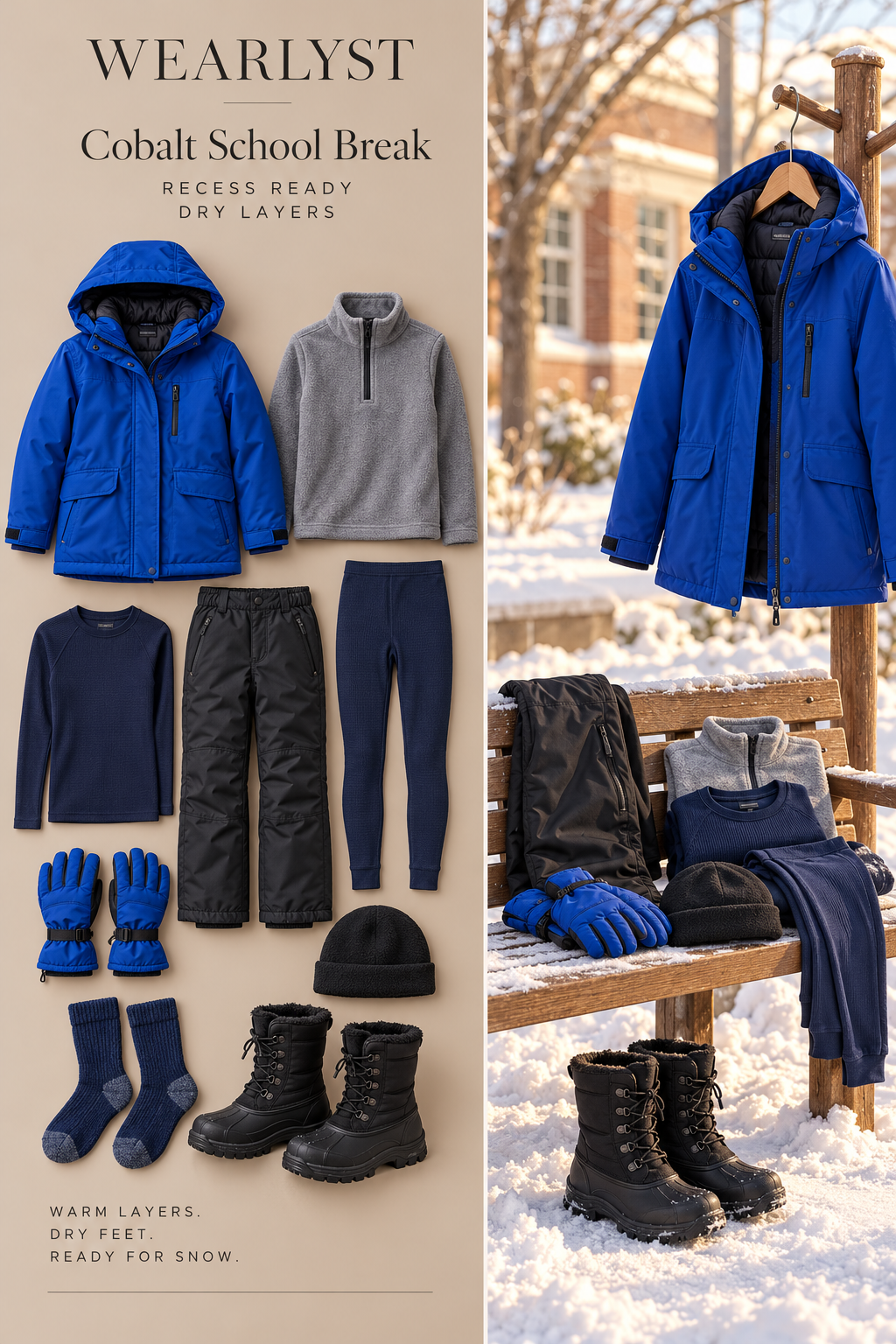
A parka and separate snow pants are easy to remove before heading back into a classroom. The fleece pullover gives you an extra layer to adjust for the weather rather than relying on one heavy garment.
Choose a cobalt waterproof insulated polyester parka, black waterproof insulated nylon snow pants, a gray polyester fleece pullover, a navy polyester thermal top and leggings, cobalt waterproof insulated gloves, a black fleece beanie, navy wool-blend socks, and black waterproof insulated snow boots. Choose a parka that covers the waistband without restricting a seated position. Practice the glove fastenings at home, label removable pieces, and pack dry socks for the trip back inside.
6. Mustard First Snow
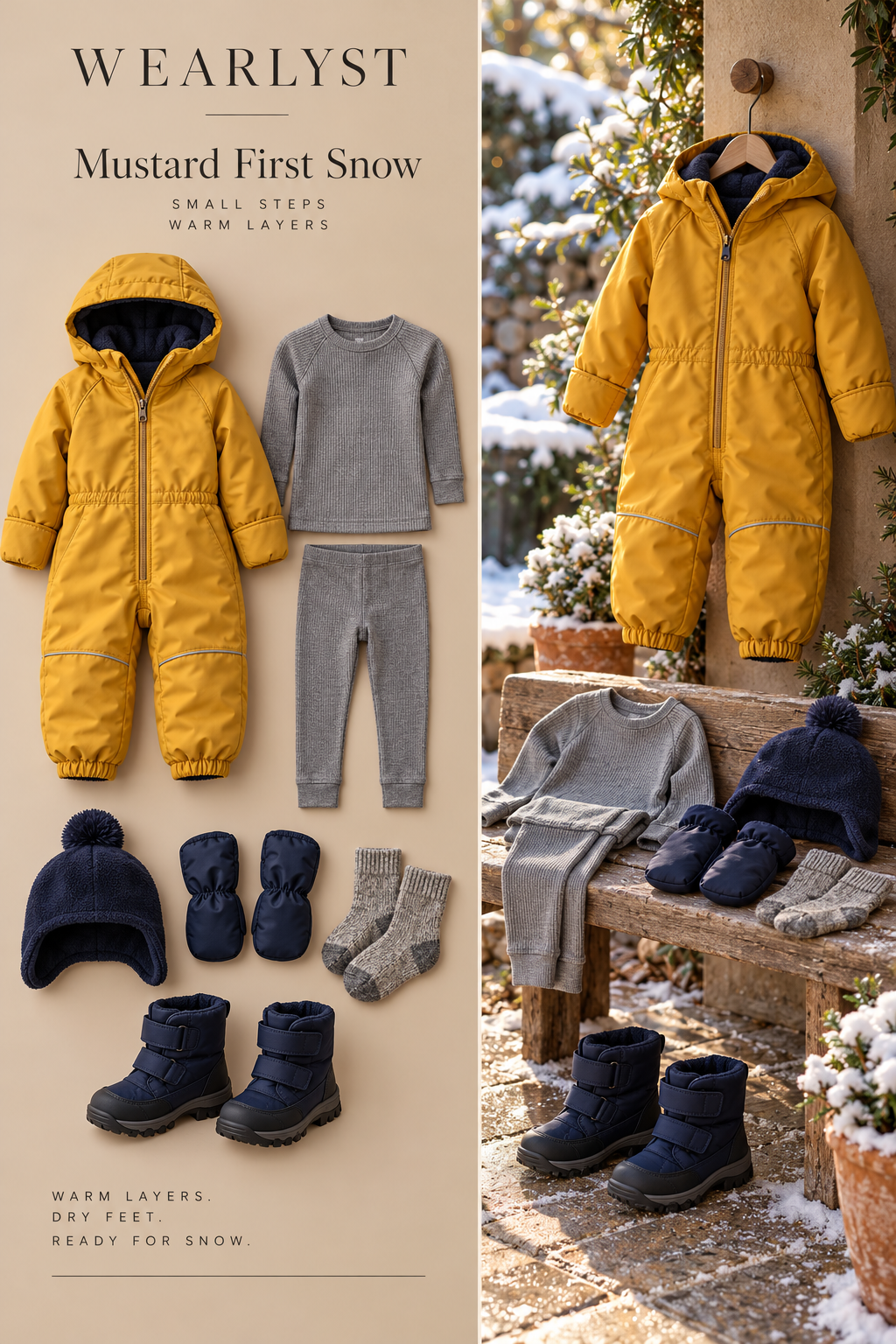
A one-piece suit keeps a first snow outfit straightforward for a toddler who is still learning to walk in bulky layers. Mustard and navy create a cheerful combination without adding loose accessories.
Choose a mustard waterproof insulated polyester snowsuit with fold-over wrist cuffs, a gray merino-blend thermal top and leggings, navy waterproof insulated mittens, a navy fleece hat, gray wool-blend socks, and navy waterproof insulated toddler snow boots. Buy by the brand’s height and weight chart rather than age alone, then check the crotch and knee room over a diaper if needed. Fold-over cuffs are an extra feature, not a reason to skip mittens; use both as their fit allows, and keep outings short and supervised.
7. Rose Winter Stroll
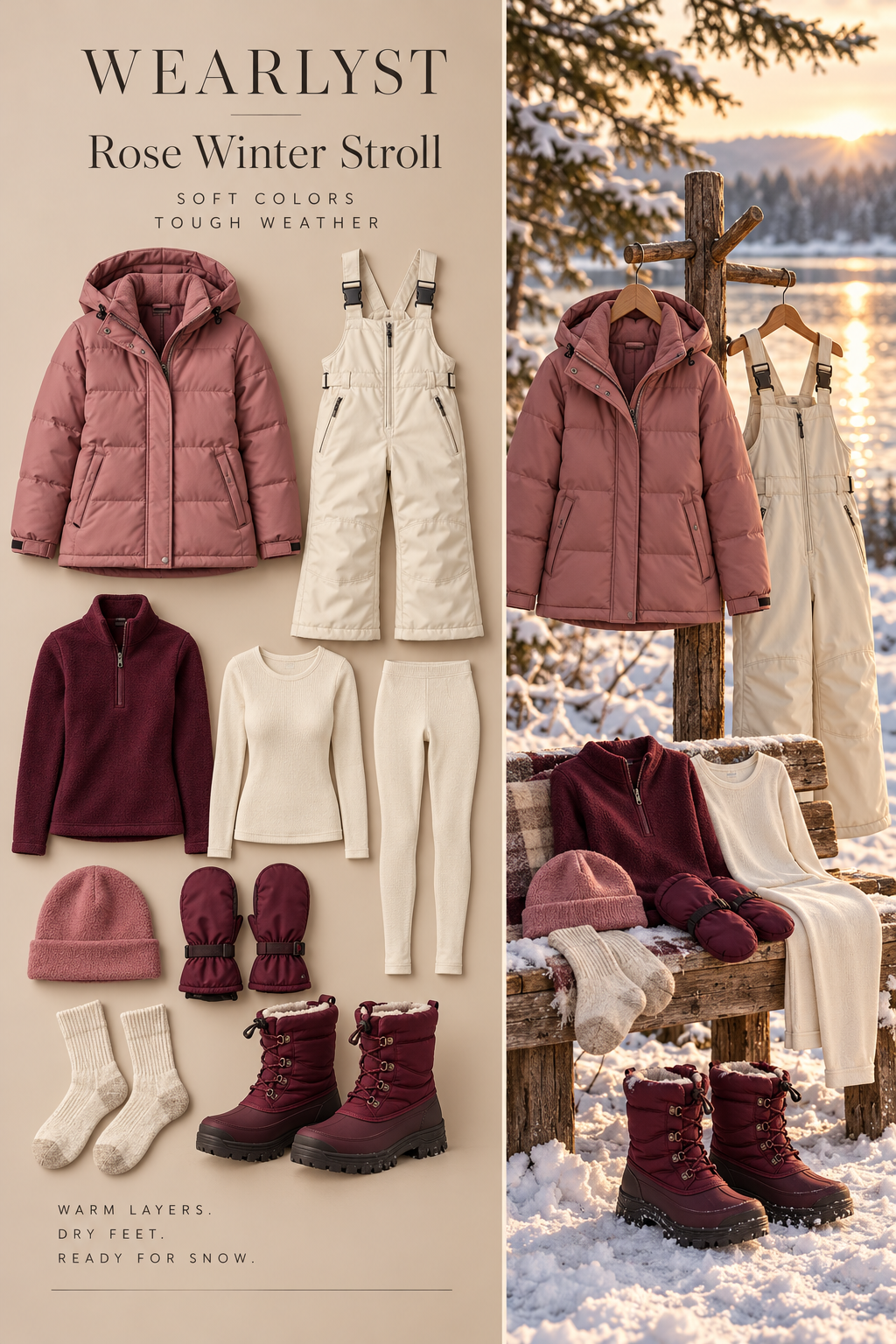
Cream bibs and a rose jacket create a softer color story, with burgundy accessories adding contrast. The fleece half-zip is useful for a slower family stroll when your child is not generating much heat.
Choose a dusty-rose waterproof insulated nylon jacket, cream waterproof insulated polyester snow bibs, a burgundy polyester fleece half-zip, a cream polyester thermal top and leggings, burgundy waterproof insulated mittens, a rose fleece beanie, cream wool-blend socks, and burgundy waterproof insulated winter boots. Make sure the cream bibs are actual snowwear rather than ordinary fleece overalls. Adjust the burgundy midlayer to the conditions, and plan indoor warm-up stops instead of adding layers until your child cannot move comfortably.
8. Orange Slush Patrol

Wet snow calls for close attention to seams, cuffs, and boot construction. An orange jacket and graphite bibs make a simple outfit that you can build around sturdy rubber-bottom boots.
Choose an orange waterproof insulated polyester jacket, graphite waterproof insulated polyester snow bibs, a black polyester thermal top and leggings, graphite waterproof insulated gloves, a black fleece beanie, orange wool-blend socks, and black waterproof insulated rubber-bottom snow boots. Look for a waterproof designation and sealed seams in product details; a water-resistant finish is not the same thing. Check the height of the boot upper, keep the bib cuffs over it, and avoid puddles deeper than the boot can handle.
9. Navy Mountain Weekend
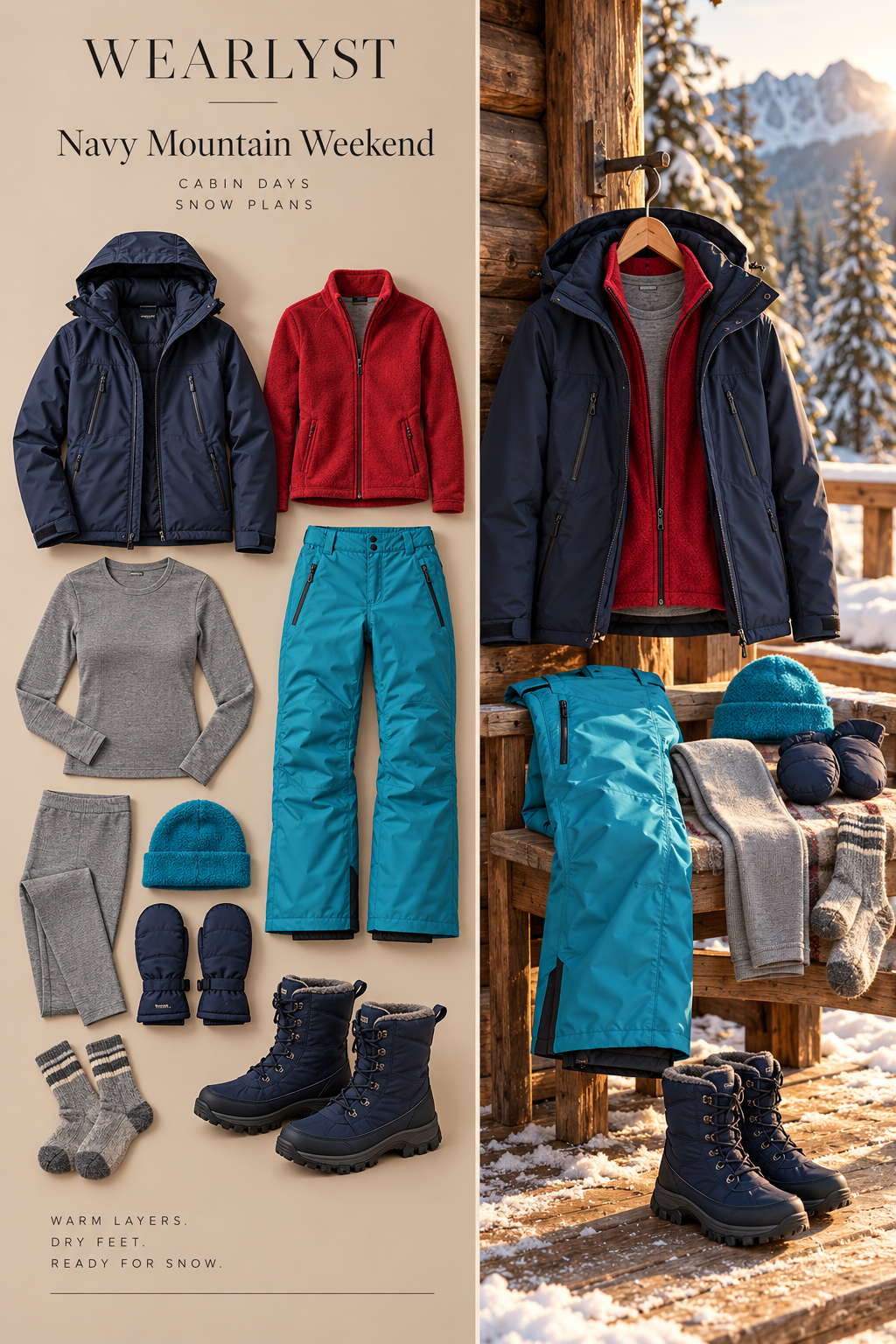
Separate navy and turquoise outer layers are easy to mix with other winter clothes for a weekend away. The red fleece adds a removable middle layer for changing activity levels near the cabin.
Choose a navy waterproof insulated nylon jacket, turquoise waterproof insulated nylon snow pants, a red polyester fleece zip jacket, a gray merino-blend thermal top and leggings, navy waterproof insulated mittens, a turquoise fleece beanie, gray wool-blend socks, and navy waterproof insulated snow boots. Pack a spare thermal set, socks, and mittens rather than expecting wet gear to dry quickly. Use this combination for ordinary snow play; skiing or snowboarding needs activity-appropriate equipment, including a properly fitted helmet.
Snow Day Outfits for Kids: Frequently Asked Questions
What should kids wear under snow pants?
Start with a synthetic or merino-blend thermal top and leggings. Add an appropriate midlayer when conditions call for it, but make sure the pants still fit comfortably through the waist, seat, and knees.
Are snow bibs or a one-piece snowsuit better for kids?
Bibs provide extra waist coverage while letting you remove the jacket separately. A one-piece suit reduces gaps, but bathroom breaks and dressing can be more involved; choose the option your child can manage with help.
How do you keep kids’ feet dry in snow?
Use waterproof insulated boots with enough space for one pair of wool-blend socks and toe movement. Keep snow-pant cuffs over the boot shafts, and change wet socks promptly.
How should you choose a toddler’s snow outfit size?
Use the specific brand’s height and weight chart, then try the suit over the layers and diaper your toddler will wear. Check seated comfort, easy knee movement, and secure boots rather than buying an oversized suit for growth.
Do kids need different layers for wet snow and very cold weather?
Wet snow makes waterproof construction and dry spare pieces especially important, while colder conditions may call for more insulation and shorter outings. Wind, age, and activity matter too; check the forecast and bring your child inside if they become cold or wet.
The Takeaway: Dry Layers, Comfortable Movement
Choose an outfit around the day’s weather and your child’s activity, not just its color. A comfortable thermal set, suitable waterproof outerwear, secure boots, and regular warm-up checks are the useful starting points.
Looking for more? See our winter mom outfits and men’s puffer jacket outfits for the adults joining the outing.